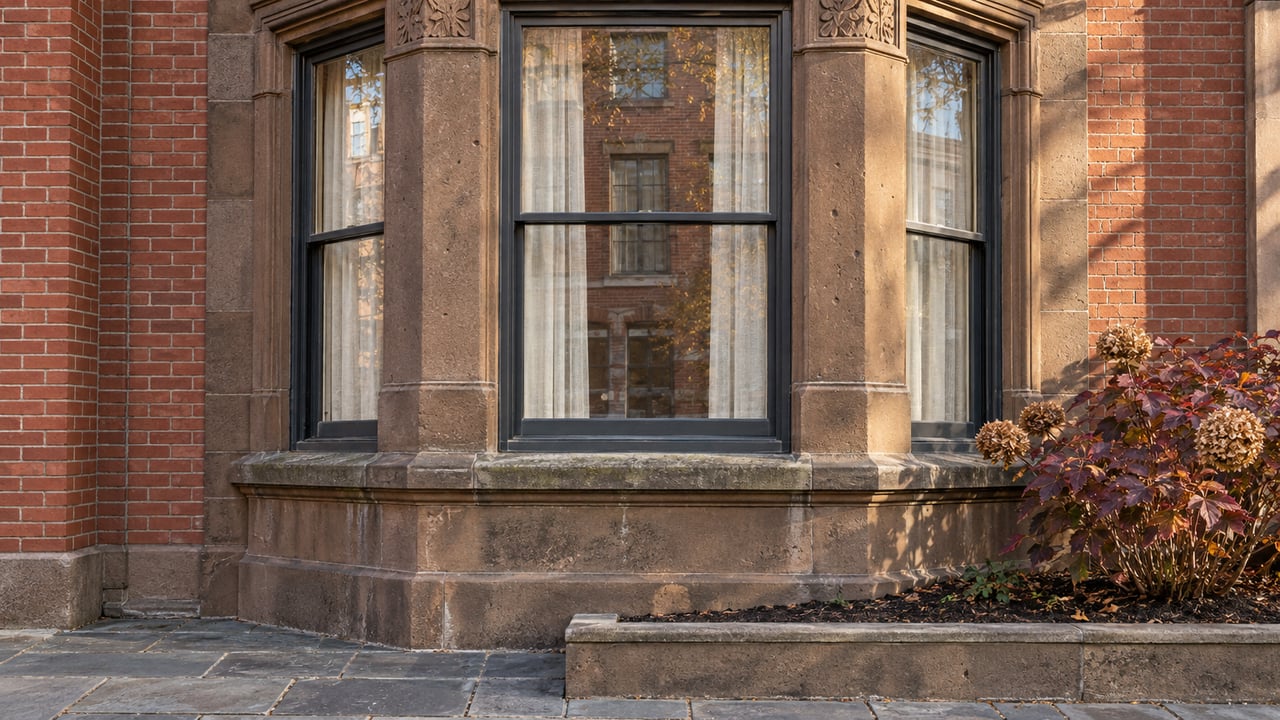
The stone walls along Sixth Street have stood since the Pennsylvania Railroad finished them between 1901 and 1905. Above them is a forest that grew in the decades after freight service ended in the 1990s. Almost every public piece of the planned park, from the bridges and paths to the transfer of the land itself, depends on approvals for a tower at the Marin Boulevard end. The settlement's outside date for those approvals is this Saturday, October 31.
A park written into a tower deal
The Jersey City Municipal Council adopted the Embankment settlement 9 to 0 on November 12, 2025, and the mayor signed it on November 18. The parties are Jersey City, the Jersey City Redevelopment Agency, the Embankment Preservation Coalition, Rails-to-Trails Conservancy, the developer Albanese through Jersey City Embankment Associates LLC, a group of property LLCs the agreement calls the "Hyman Interests," and NZ Funding. Their dispute was long. The Coalition's founders, Maureen Crowley and Peter Delman, began organizing in 1998. The Embankment went on the State Register in 2000, and after Conrail sold the property in 2005, Jersey Digs reported, the case went through roughly 20 years of litigation.
The settlement ordinance divides the structure block by block:
| Section of the Embankment | What the settlement assigns it |
|---|---|
| Block 1, Marin Boulevard to Manila Avenue | Acquired by Albanese for a residential building, with a 30-foot public right-of-way, a 15-foot grand staircase with bike chute, a public elevator, two public restrooms, and a pedestrian bridge to Block 2 |
| Block 2 | First section of the public park, built by Albanese to a design from a city-led process |
| Blocks 3 through 6 | "Park Parcels" transferred to the city |
| Parts of Blocks 7 and 8 | Also transferred to the city as Park Parcels |
| Roberto Clemente Field | Upgrades funded by Albanese |
The park parcels can be used for public, recreation, open-space, and light-rail or trail purposes. Upkeep is split. The developer maintains the Block 1 restrooms permanently, and the city maintains the elevator and staircase. The Block 2 park and the Clemente Field work are capped by a budget tied to the tower's tax agreement.
That tax agreement is a separate PILOT ordinance. It describes Block 1 as a 40-story rental building with 604 apartments, 30 of them affordable, and 172 parking spaces. Instead of conventional property taxes, the building would pay the city 10% of its gross revenue each year, plus a separate $1,001,541 to the Affordable Housing Trust Fund. At the council caucus in October 2025, Hudson County View reported, the city's financial advisor put the public benefits at $40 million and PILOT revenue at about $120 million over the life of the agreement. At the November vote, Hudson County View reported, Acting Corporation Counsel Brittany Murray said the PILOT would gross $122 million over 30 years, compared with $213 million in conventional taxes.
The clause that ties the park most closely to the tower is about the deeds. The park parcels pass to the city on the earlier of two dates. One is the closing of Block 1. The other is five years after the settlement conditions are met and the remaining lawsuits and federal rail proceedings have ended. The parcels transfer "as is," and the city takes on responsibility for them from that point. The fastest route to public land on Blocks 2 through 6 is a Block 1 closing.
The dates the contract runs on
The federal obstacle cleared this year. On February 27, 2026, the Surface Transportation Board lifted a stay it had issued in 2009. That allowed Conrail to abandon about 1.36 miles of line in Jersey City, subject to historic preservation and public use conditions, and the board denied the city's appeal on its earlier offer of financial assistance. Jersey City Times reported that the decision cleared the way for the negotiated settlement to move forward. Green Interfaith Environmental Organization then filed a public use condition request on March 2 and a supplement on March 6.
The local approvals run on a separate schedule. The settlement lists five conditions:
- Planning Board approval of the preliminary site plan for the Block 1 tower
- A council or JCRA resolution and a signed PILOT financial agreement
- A council ordinance amending inclusionary zoning to allow the 30 affordable units
- A JCRA resolution and a signed redeveloper agreement
- A council ordinance approving the settlement itself
Each approval also has to become "final and unappealable." Under the agreement, that happens once the item is approved and published and 45 days pass without a timely appeal. The city committed to try to have the Planning Board hear and approve the preliminary site plan by March 31, 2026, and to finish the Block 2 design process by the same date. No 2026 Planning Board agenda posted on the city's open data portal lists the Block 1 application. That includes the agenda for the October 27 meeting.
What October 31 changes
If the conditions are not met by October 31, 2026, either Albanese or the Hyman LLCs may end the agreement on at least 30 days' notice to the other parties. If the problem is fixed within those 30 days, the notice is treated as rescinded. If either one used that right, the escrow arrangement would end, and the tax agreement, redevelopment agreement, and zoning approvals tied to the settlement would become void.
The later dates are already set. Albanese has agreed to "endeavor" to start construction by December 31, 2026. Conrail's dismissal documents are due by February 15, 2027. The litigation and federal rail proceedings must end, and the abandonment be completed, by October 31, 2028. If Conrail misses either of its dates, the city also gets a right to terminate. The agenda for the Planning Board's next regular meeting, carried over items included, shows whether the Block 1 site plan is moving.
What Block 2 would be, if it gets built
The park plan is the easier part of the project to picture. The city held two virtual community meetings on March 16 and 17, 2026, and an in-person meeting on March 24. The design survey asked residents to rate a set of principles. These included preserving the stone walls, a "light touch" design, protecting the vegetation that grew on its own, conserving as much forest as possible, natural path materials, mass timber bridges, and lighting aimed downward to protect the night sky. Proposed Block 2 programs included discovery play inspired by nature or art, a public art meadow, an outdoor classroom, and seating and lookouts for watching wildlife.
The design approach comes from the Coalition's volunteer team. Jersey Digs identified its leader as Sean Gallagher, director of sustainable design at Diller Scofidio + Renfro, the firm that designed the High Line. He told the outlet:
"The approach we have taken is, the less we disturb, the better it is. So we developed this idea of a 'light touch.'"
That approach rests on a 2022 ecological survey commissioned by the Coalition from Rutgers professor Frank Gallagher and the Meadowlands Environmental Research Institute. It found a healthy forest with surprisingly few invasive species, which had grown after the structure was closed to people. Architect Jake Lefeber, a volunteer on the design team, told Jersey Digs that a conventional playground "would destroy much of the ecosystem there and also be more costly."
The survey left several practical choices open, and they will shape how the park fits into the surrounding blocks:
- Access points. One option has stairs and an elevator only at Marin Boulevard and Brunswick Street. A second adds a central entrance near Jersey Avenue. The widest option has elevators at both ends and the center, plus stairs at every cross street, for seven access points in total.
- Bicycles. One option mixes shared and separated paths on top of the Embankment. The other keeps the top pedestrian-only and puts bike lanes at street level. Block 2 as drawn has an ADA-compliant main path plus a more natural trail that could later carry cyclists.
- Hours. Respondents chose among 24/7, dawn to dusk, and dawn to 10 p.m.
- Stormwater. The survey asked about rain gardens, stormwater storage, and pervious pavement.
The city also lists the Embankment as the preferred long-term route for the East Coast Greenway through Jersey City, alongside the Essex-Hudson Greenway and the Bergen Arches.
Who is keeping the forest in public view
For now, the corridor is visible only from street level. The city's materials describe the trail, the park, and the Block 1 access as future work that depends on the settlement being fully carried out. Until then, the Coalition has kept the Embankment in public view through exhibitions. Its 2026 calendar included a design exhibition from April 11 to 26 for the two easternmost blocks, and a youth eco-art exhibition from June 1 to 6. At IMUR Gallery, 67 Greene Street, the show "From Vision to Reality" paired Sarah Yu's botanical illustrations and Kay Kenney's photographs of species along the corridor with images of rusted track by Anthony Boone, Edward Fausty, and William A. Ortega.
Crowley described the result to Jersey Digs as "a compromise we can deal with because we were looking at razing the entire structure." The city's survey also asked residents whether they would volunteer or donate to support the park, because most successful Jersey City parks depend on a "Friends of" group alongside city maintenance. Anyone who wants to help can sign up through the Embankment Preservation Coalition's volunteer page.
Along Sixth Street, the Embankment affects how buyers see the blocks between Marin and Brunswick, and what to expect from a stoop facing those walls. If you are weighing a home near the corridor and want to talk through what the settlement's timeline could mean for that block, Dwellings with Leda & Co will follow the Planning Board agenda with you, one meeting at a time. Let's Connect.